
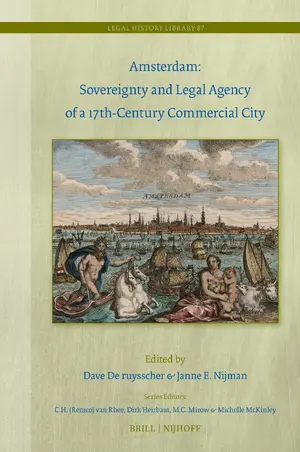
Brill has just published “𝐋𝐚𝐰 𝐚𝐬 𝐑𝐞𝐬𝐨𝐮𝐫𝐜𝐞? 𝐃𝐞𝐛𝐭 𝐀𝐝𝐣𝐮𝐬𝐭𝐦𝐞𝐧𝐭 𝐒𝐜𝐡𝐞𝐦𝐞𝐬 𝐚𝐧𝐝 𝐭𝐡𝐞 𝐀𝐦𝐬𝐭𝐞𝐫𝐝𝐚𝐦 𝐄𝐜𝐨𝐧𝐨𝐦𝐲 (𝐒𝐞𝐯𝐞𝐧𝐭𝐞𝐞𝐧𝐭𝐡 𝐂𝐞𝐧𝐭𝐮𝐫𝐲)” by dr. Maurits den Hollander as part of the new volume ‘Amsterdam: Sovereignty and Legal Agency of a 17th-Century Commercial City’, edited by Dave De ruysscher and Janne E. Nijman.
The contribution examines insolvency practices in seventeenth-century Amsterdam as a window onto the city’s legal agency and institutional adaptability. Focusing on the Desolate Boedelskamer and the development of accords (majority compositions), it argues that law functioned not only as a mechanism of dispute resolution, but also as a resource through which Amsterdam’s authorities managed commercial risk, restructured property rights, and sustained economic resilience.
The volume has been published open access, so this chapter as well as other interesting contributions are freely available to read here: [link].

dr. Maurits den Hollander
Author